
Controlling the Flow: How Control Panels Can Optimize Vending Machine Performance
30 seconds summary
Control panels are the brain of a vending machine. In about 30 seconds, they manage product selection, payments, temperature, inventory tracking, and error alerts from one central system.
A well-designed panel improves machine uptime by detecting faults early, supports cashless and contactless payments, and helps operators see which items sell fastest. It can also optimize energy use by controlling cooling, lighting, and standby modes.
In short, better control panels make vending machines faster, smarter, more reliable, and more profitable.
Vending machines have become an important part of modern retail. They are no longer limited to selling simple snacks and soft drinks. Today, vending machines can provide coffee, fresh food, frozen meals, electronics, personal care products, medicines, and even customized products. They operate in offices, hospitals, schools, airports, factories, shopping centers, hotels, and public transport stations. Because these machines often operate without direct human supervision, their performance depends heavily on automation, reliability, and intelligent internal controls.
At the center of this automation is the control panel. The control panel is the central hub for electrical power, electronic signals, sensors, switches, motors, payment systems, and display units. It acts like the brain and nervous system of the vending machine. Every action, from accepting payment to dispensing a product, depends on the control panel working correctly.
A well-designed control panel can improve vending machine performance in many ways. It can reduce downtime, speed up transactions, improve product safety, lower energy consumption, simplify maintenance, and enhance the customer experience. In contrast, a poorly designed control panel can lead to repeated failures, confusing errors, slow operation, safety risks, and lost sales.
Control panel accessories also play a major role in vending machine performance. Items such as terminal blocks, circuit breakers, relays, switches, cable glands, indicators, wiring ducts, cooling fans, sensors, and enclosures may seem small, but they help keep the machine safe, organized, and efficient. These accessories protect the internal system and allow technicians to service the machine more easily.
The Control Panel as the Machine’s Command Center
The control panel is the command center of a vending machine. It receives information from different parts of the machine and sends instructions to the correct components. When a customer selects a product, the control panel checks whether the item is available, confirms payment, activates the correct motor, monitors the dispensing process, and updates the machine’s inventory record.
This process may look simple from the customer’s point of view, but many internal actions happen within seconds. The payment system must communicate with the controller. The selection button or touchscreen must send the correct signal. The product motor or coil must rotate properly. Sensors may confirm that the item has dropped. The display must show the right message. If something goes wrong, the machine must identify the issue and respond safely.
Without a reliable control panel, these actions can become slow, inaccurate, or unstable. Customers may be charged without receiving a product, products may become stuck, or the machine may display incorrect information. A robust control panel reduces these problems by keeping all functions coordinated.
Managing Power and Signal Flow
One of the most important jobs of a control panel is managing the flow of power and signals. Vending machines contain many electrical and electronic parts. Some components need low-voltage signals, while others require higher power. For example, a touchscreen, payment module, and sensor may use low-voltage electronic signals, while compressors, heaters, lights, and motors may need more power.
The control panel helps separate, organize, and protect these circuits. This makes the machine safer and more efficient. Circuit breakers, fuses, relays, and contactors help control power safely. Terminal blocks and wiring ducts keep wires arranged properly. Labels and diagrams help technicians understand how the system is connected.
Good power management also protects sensitive components. Payment systems, digital displays, and communication modules can be damaged by voltage fluctuations, short circuits, or poor grounding. Proper control panel design helps reduce these risks.
The Importance of Control Panel Accessories
Control panel accessories are essential because they support the main electrical system. They may not always be visible to customers, but they strongly affect machine performance.
Terminal blocks provide secure wire connections and make it easier to replace components. Relays allow small control signals to operate larger electrical loads. Circuit breakers and fuses protect the machine from overloads and short circuits. Indicator lights show whether power is available or whether a fault has occurred. Cable glands protect wires where they pass through metal or plastic surfaces. Cooling fans prevent heat buildup inside the panel. Enclosures protect the control system from dust, moisture, impact, and accidental contact.
Each accessory contributes to reliability. When accessories are chosen carefully and installed correctly, the vending machine becomes easier to maintain and less likely to fail.
Improving Reliability and Uptime
Reliability is one of the most important performance measures for vending machines. A vending machine only earns money when it is working. If it is out of service, it loses sales and may disappoint customers. Frequent failures can also damage the vending operator’s reputation.
A well-designed control panel improves reliability by reducing the chances of electrical faults, loose connections, overheating, and communication errors. Organized wiring helps prevent accidental disconnections. Proper ventilation prevents components from overheating. Protective devices stop small electrical problems from becoming major failures.
Uptime is especially important for machines placed in high-traffic areas. A vending machine in an airport, hospital, or office building may serve hundreds of people each day. Even a few hours of downtime can lead to lost income. By improving control panel quality, operators can keep machines available for longer periods.
Faster Troubleshooting and Maintenance
When a vending machine develops a problem, technicians need to find and fix the issue quickly. A neat, labeled, and accessible control panel makes troubleshooting much easier.
If wires are tangled, labels are missing, or components are poorly arranged, repairs take longer. Technicians may need extra time to trace circuits or identify faulty parts. This increases labor costs and keeps the machine offline for longer.
A good control panel layout allows technicians to inspect components quickly. Indicator lights can show whether the machine has power, whether a circuit is active, or whether a fault has occurred. Diagnostic displays can provide error codes. Modular parts can be replaced without disturbing the entire system.
This improves service efficiency. Instead of guessing, technicians can follow a clear path from the error message to the faulty component.
Supporting Modern Payment Systems
Payment technology has significantly changed vending machines. Older machines mainly accepted coins and notes. Modern machines may accept debit cards, credit cards, mobile wallets, QR codes, prepaid cards, and contactless payments.
The control panel must support communication between the payment device and the machine controller. When payment is approved, the panel must receive the signal and allow the selected product to be dispensed. If payment fails, the machine must prevent dispensing and show a clear message to the customer.
Reliable payment integration is critical. Customers expect fast and accurate transactions. If a machine frequently rejects valid payments or charges customers without dispensing products, trust is lost. A strong control system helps prevent these problems.
Inventory Monitoring and Stock Control
Inventory control is another area where control panels improve performance. Traditional vending operators often had to visit machines regularly to manually check stock. This could waste time and fuel, especially if machines were not empty or did not need service.
Modern vending machines can use sensors and control panel connections to monitor stock levels. The machine can detect when certain products are sold out or running low. This information can be sent to a remote monitoring system.
With better inventory data, operators can plan restocking more efficiently. They can focus on machines that need attention and bring the right products for each location. This reduces unnecessary trips and helps prevent popular items from being unavailable.
Temperature Control and Product Safety
Many vending machines sell temperature-sensitive products. Cold drinks, sandwiches, dairy products, fresh meals, frozen foods, and certain health products must be stored within safe temperature ranges. If the temperature is not controlled properly, products may spoil or become unsafe.
The control panel manages temperature sensors, compressors, fans, heaters, and thermostats. It can monitor internal temperature and activate cooling or heating systems when needed. If the temperature rises above a safe level, the machine can trigger an alarm, stop sales, or send a remote alert.
This protects customers and reduces product waste. Temperature control is especially important for food vending machines, where safety and freshness directly affect customer trust.
Energy Efficiency and Operating Costs
Vending machines often run continuously, which means energy use can become a major operating cost. Refrigeration, lighting, displays, motors, and payment systems all consume power.
Smart control panels can help reduce energy consumption. They can dim lights during low-traffic hours, place displays into sleep mode, adjust cooling cycles, and activate components only when needed. Some machines can use sensors to detect customer presence and turn on displays or lighting only when someone approaches.
Energy efficiency benefits both the operator and the environment. Lower power consumption reduces monthly costs and supports sustainability goals. Over many machines, even small energy savings can become significant.
Enhancing Customer Experience
Customer experience is a major part of vending machine success. Customers want machines that are fast, simple, reliable, and easy to use. The control panel supports this experience by ensuring that buttons, touchscreens, displays, payment systems, and dispensing mechanisms work together smoothly.
A responsive control system reduces waiting time. Clear display messages help customers understand what to do. Accurate product selection prevents confusion. Reliable dispensing reduces refund complaints.
If the machine is slow or unreliable, customers may avoid using it in the future. On the other hand, a smooth and convenient vending experience encourages repeat purchases.
Security and Protection
Vending machines can be targets for theft, vandalism, and tampering. They may contain cash, products, and valuable electronic components. Control panels can improve security by connecting to door sensors, locks, alarms, cameras, and remote alert systems.
If a machine door is opened without authorization, the control system can record the event or notify the operator. If tampering is detected, the machine can disable certain functions. Electrical protection accessories also help prevent damage from power surges or unsafe operation.
Security is not only about preventing theft. It is also about protecting customer data. Machines that accept card or mobile payments must handle transaction information safely. A properly designed control system supports secure payment communication.
Control Panel Layout and Organization
Good layout is essential for control panel performance. Components should be placed logically, with enough space for airflow, wiring, and maintenance. High-power components should be separated from sensitive electronic parts when needed. Wires should be routed cleanly through ducts or cable ties.
Labels should be clear and durable. Technicians should be able to identify circuits, terminals, and components without confusion. The panel should also allow easy access to parts that may need regular inspection or replacement.
A clean layout reduces human error during maintenance. It also improves safety because technicians can work more confidently and avoid accidental contact with live circuits.
Enclosures and Environmental Protection
The enclosure protects the control panel from external conditions. Vending machines may be installed indoors, outdoors, or in semi-protected areas. They may face dust, humidity, heat, vibration, insects, or accidental impact.
A strong enclosure protects sensitive electrical parts. Outdoor machines may need weather-resistant enclosures. Machines in factories or public spaces may need protection from dust or rough handling. Machines near food preparation areas may require protection from moisture or cleaning chemicals.
Choosing the right enclosure helps extend the life of the control system and reduces the risk of failure.
Customization for Different Vending Machines
Not all vending machines have the same control needs. A snack machine may need multiple motors and product sensors. A beverage machine may require refrigeration control. A coffee vending machine may include heaters, grinders, pumps, water level sensors, and cleaning systems. A frozen food machine may need stronger temperature monitoring and compressor control.
The control panel must be designed according to the machine’s purpose. A flexible control panel allows manufacturers and operators to add or adjust functions as needed. This customization improves performance because the machine is controlled according to its specific operating requirements.
Remote Monitoring and Smart Connectivity
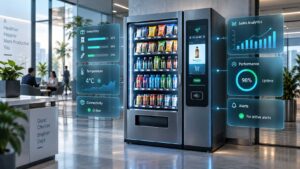
Remote monitoring has become one of the most valuable improvements in vending machine management. Through communication modules connected to the control panel, vending machines can send real-time data to operators.
This data may include sales numbers, stock levels, machine temperature, payment status, fault codes, and door activity. Operators can view this information from a computer or mobile device.
Remote monitoring helps reduce unnecessary service visits. It also allows faster response when a machine has a problem. Instead of waiting for a customer complaint, the operator can receive an alert and take action quickly.
Conclusion
Control panels are central to vending machine performance. They manage the flow of power, information, commands, and feedback that allows the machine to operate smoothly. From payment processing and product dispensing to temperature control, energy management, security, and remote monitoring, nearly every important vending function depends on the control panel.
Control panel accessories also play an essential role. Terminal blocks, relays, fuses, circuit breakers, switches, sensors, wiring ducts, cooling fans, indicators, and enclosures all help improve safety, reliability, and serviceability.
For vending machine operators and manufacturers, investing in a well-designed control panel is a smart business decision. It reduces downtime, improves customer satisfaction, lowers operating costs, supports future upgrades, and increases profitability.