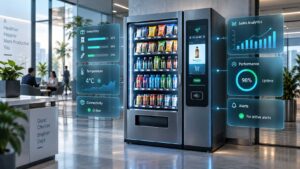

Thermostats and Cold Controls: Master Your Vending Machine’s Temperature Settings
Imagine walking up to a vending machine on a hot summer day, inserting your money, and pulling out a warm soda. The disappointment is immediate. For vending machine operators, this scenario is more than an inconvenience; it is a direct threat to profitability, reputation, and food safety. The heart of any refrigerated vending machine is its cooling system, and the brain of that system is the thermostat or cold control.
Understanding how to manage, adjust, and troubleshoot these components is a vital skill for anyone looking to run a successful vending business. Proper temperature regulation ensures that beverages remain crisp, snacks do not melt, and perishable items like sandwiches or dairy products stay safely outside the danger zone for bacterial growth. This comprehensive guide will walk you through the inner workings of vending machine thermostats, how to optimize your settings, and how to maintain your equipment for peak cooling efficiency.
1. The Anatomy of Vending Machine Cooling Systems
To effectively master your machine’s temperature settings, you must first understand the components that make refrigeration possible. A standard vending machine relies on a closed loop refrigeration system that is quite similar to a residential refrigerator, though it is built to endure much more frequent use and harsher environmental conditions.
The thermostat, often referred to in the commercial beverage industry as the cold control, acts as a switch that regulates power to the compressor. The compressor is the pump that moves refrigerant through the system. When the internal temperature of the machine rises above your designated set point, the thermostat closes an electrical circuit, which activates the compressor and starts the cooling cycle. Once the system cools the cabinet down to the desired temperature, the thermostat opens the circuit, shutting the compressor off to save energy and prevent freezing.
Traditional vending machines utilize mechanical cold controls. These units feature a capillary tube filled with a temperature sensitive gas or liquid. The tip of this tube sits near the evaporator coil or in the return airflow path. As the temperature shifts, the fluid inside the tube expands or contracts, physically moving a diaphragm or bellows inside the thermostat housing to open or close the electrical contacts.
Modern equipment features electronic thermostats and digital controllers. These advanced systems use electronic thermistors, which are sensors that change electrical resistance based on temperature. Digital controllers offer much tighter temperature tolerances, real time digital displays, and customizable programming for different product zones.
2. Determining the Ideal Temperature Settings for Different Products
There is no single correct temperature for every vending machine because optimal settings depend entirely on the inventory you choose to stock. Setting the temperature too cold can lead to frozen beverages that burst or high energy bills. Conversely, setting it too warm can ruin inventory and cause health code violations.
Beverage Vending Machines
If your machine exclusively dispenses canned and bottled drinks, your main objective is refreshing crispness. The ideal temperature range for soda, water, sports drinks, and juices is between 35 and 38 degrees Fahrenheit, which translates to approximately 1.6 to 3.3 degrees Celsius. Carbonated beverages taste best when they are thoroughly chilled, and cold temperatures help maintain carbonation levels when the container is opened.
Combo and Snack Machines
Combination machines present a unique challenge because they hold both temperature sensitive items and dry goods. If you are vending chocolate bars, pastries, and chips alongside beverages, you must balance your settings. Chocolate begins to soften and bloom, developing an unappealing white film, at temperatures above 75 degrees Fahrenheit. However, keeping the entire cabinet at 35 degrees Fahrenheit can cause dry snacks to become brittle or condensation to form on the packaging. For standard snack and chocolate configurations, a ambient cabinet temperature between 50 and 55 degrees Fahrenheit is generally ideal, while localized cold zones are utilized for the drinks.
Perishable Food Machines
Machines that dispense fresh salads, sandwiches, milk, or frozen meals require strict temperature management to comply with public health standards. According to food safety regulations, cold perishable foods must be maintained at or below 41 degrees Fahrenheit. Most operators set their fresh food machines to 36 or 37 degrees Fahrenheit to provide a safe buffer. Frozen food machines must maintain a constant temperature of 0 degrees Fahrenheit or lower to prevent thawing and freezer burn. Many modern food machines feature a health safety switch, which automatically locks out the machine and prevents sales if the internal temperature rises above 41 degrees Fahrenheit for more than a specific timeframe, usually 30 minutes.
3. Step by Step Guide to Adjusting Mechanical and Digital Controls
Adjusting your machine’s temperature requires precision. You should always make small, incremental changes and allow the machine ample time to stabilize before adjusting it further.
Adjusting Mechanical Cold Controls
Mechanical thermostats are typically located near the refrigeration deck at the bottom of the machine or behind the interior product delivery chutes. They usually feature a dial or a slotted screw face labeled with numbers, often ranging from 1 to 9, or marked simply as “Colder” and “Warmer.”
- Locate the Control: Turn off power to the machine before reaching into any internal compartments to ensure safety.
- Identify the Current Setting: Note the position of the dial. On most mechanical units, a higher number signifies a colder setting, not a specific temperature degree.
- Make Small Adjustments: If your machine is running at 42 degrees Fahrenheit and you want it at 38 degrees Fahrenheit, turn the dial clockwise toward a higher number by one increment or a quarter turn.
- Monitor the Stability: Restore power, close the machine door completely, and leave it undisturbed for at least 24 hours. Placing a standard calibrated thermometer inside the cabinet will give you an accurate reading of the core air temperature after a full day of operation.
Programming Digital Controllers
Digital controllers are much more user friendly once you understand the menu structure. Brands like Dixie Narco, Royal Vendors, and Vendo utilize digital boards where you can input specific temperature values.
- Enter Programming Mode: Open the outer door and locate the service door switch. Press the mode or program button on the main control board.
- Navigate to Temperature Settings: Use the selection buttons on the front of the machine to scroll through the menu until you see codes like “TEMP,” “ST” (Set Point), or “REF.”
- Adjust the Set Point: Enter the sub menu and change the target temperature degree by degree. Digital controllers also allow you to adjust the “differential” or “hysteresis,” which is the allowable temperature variance before the compressor kicks back on. A standard differential is 3 to 4 degrees.
- Save and Exit: Press the enter or save button and exit programming mode. Ensure the internal temperature sensor wire is securely mounted and not touching the metal walls directly, as this can cause inaccurate readings.
4. Troubleshooting Common Temperature and Thermostat Issues
Even well maintained vending machines will occasionally encounter cooling problems. Knowing how to diagnose whether the issue stems from the thermostat or another component can save you hundreds of dollars in unnecessary technician fees.
The Machine is Not Cooling at All
If the internal cabinet is warm and you do not hear the compressor running, the thermostat might be faulty or stuck in an open position. To test a mechanical thermostat, you can perform a continuity check. First, disconnect power from the machine. Remove the two primary wires attached to the cold control terminals and connect them together using a jumper wire. Plug the machine back in. If the compressor starts up immediately, your refrigeration deck is functioning perfectly, meaning the thermostat itself is broken and requires replacement. If the compressor still does not run, the issue likely points to a failed start relay, an overloaded compressor, or a blown fuse on the control board.
The Machine is Freezing Everything
When soda cans start exploding or water bottles turn to solid ice, the system is running constantly without cycling off. This issue typically indicates that the thermostat contacts have welded together over time, keeping the circuit permanently closed. It can also happen if the capillary tube on a mechanical thermostat has leaked its internal gas charge, leaving it unable to detect changes in temperature. Inspect the capillary tube for cracks or kinks. If the tube is intact but the compressor refuses to shut off unless you pull the plug, replacing the cold control unit is the most effective solution.
Airflow Obstructions and System Cleanliness
Sometimes, temperature issues are not caused by the thermostat at all, but rather by poor airflow. If air cannot circulate efficiently across the evaporator and condenser coils, the machine cannot shed heat. Dust, lint, and debris accumulate rapidly on the lower condenser coils, acting as an insulating blanket that forces the compressor to work twice as hard.
While keeping the internal components clean is essential for food and beverage safety, external cleanliness around the vending route environment also plays a role in overall machine longevity. For example, if your vending route includes businesses that experience heavy dust or airborne particles, much like the environment during professional air duct cleaning processes, your machine coils will clog much more rapidly. Operators should vacuum and brush clean the condenser coils at least once every six months, or every three months in high traffic locations, to maintain proper heat exchange and prevent premature thermostat failure.
Summary and Maintenance Best Practices
Mastering your vending machine’s temperature settings is a balance of technical knowledge, precise adjustment, and proactive preventative maintenance. By understanding the specific thermal requirements of your product lines, choosing between mechanical and digital components wisely, and knowing how to diagnose basic continuity issues, you can maximize your inventory shelf life and ensure a premium experience for every customer.
Keep a dedicated maintenance log for each machine on your route. Record the date, the ambient location temperature, and the internal settings whenever you make an adjustment. Regularly inspect your door gaskets and seals, as cracked or loose rubber allows warm air to seep into the cabinet continuously, creating localized warm spots and causing the thermostat to cycle erratically. Investing time into understanding these systems today will safeguard your revenue, reduce energy consumption, and extend the operating life of your commercial equipment for years to come.
Take Action Today
Are you experiencing inconsistent cooling patterns or mysterious temperature spikes in your vending equipment? Do not wait for spoiled product to alert you to a breakdown. Open your machine, clean the condenser coils, and check your current thermostat readings against the optimal guidelines outline above. If you suspect your current controller is failing, source a high quality OEM replacement part immediately to keep your business running smoothly and your beverages perfectly chilled.